Satellite technology comprises orbital and suborbital systems that collect, transmit, and process data globally. Orbits are stable paths sculpted by gravity, inertia, and propulsion, enabling predictable motion and mission longevity. Sensors convert environmental measurements into signals, with onboard processing reducing data volume before downlink to ground stations. The result is integrated support for weather, navigation, and communications, all bounded by ethics and end-of-life planning. The implications are vast, and the next questions concern optimization and risk management.
What Is Satellite Technology Really About
Satellite technology encompasses the use of orbital and suborbital systems to collect, transmit, and process data across the globe. This field integrates communication, navigation, and sensing functions, supporting autonomous operations and research. It raises satellite ethics considerations for responsible use and governance. Orbital debris management shapes design choices, collision avoidance, and end-of-life plans to sustain long-term space access.
See also: turf-universel
How Orbits Keep Satellites Up There
Orbits are the stable paths that keep a satellite in continuous motion around a planet by balancing gravitational pull with the satellite’s inertia.
The concept of orbital mechanics governs trajectory, altitude, and period, enabling predictable motion.
Propulsion systems provide maneuver capability, correcting drift and adjusting orbit.
Understanding requires precise timing, velocity changes, and energy management to maintain desired configuration and mission longevity.
From Sensors to Signals: How Satellites Collect and Share Data
Data collection on satellites begins with sensors that measure environmental and system parameters, converting physical phenomena into electrical signals. Transduced data enter sensor payloads, where calibration, filtering, and formatting prepare streams for transmission. Onboard processing reduces volume before downlink.
Data downlinkoffs occur via defined radio links to ground stations, where received signals are demodulated, reconstructed, and archived for analysis, sharing, and subsequent mission decisions.
Real-World Impacts: Weather, GPS, and Global Communications
Advances in sensor performance and data handling enable tangible outcomes in meteorology, navigation, and global communications.
Real-world impacts emerge through improved weather forecasting, resilient satellite links, and enhanced timing services.
Weather forecasting benefits from refined data assimilation and rapid latency reductions, while GPS accuracy improves via precise orbit determination and ground-system corrections.
Global communications rely on robust link budgets, spectrum efficiency, and interference mitigation for dependable connectivity.
Frequently Asked Questions
How Do Satellites Power Themselves in Space?
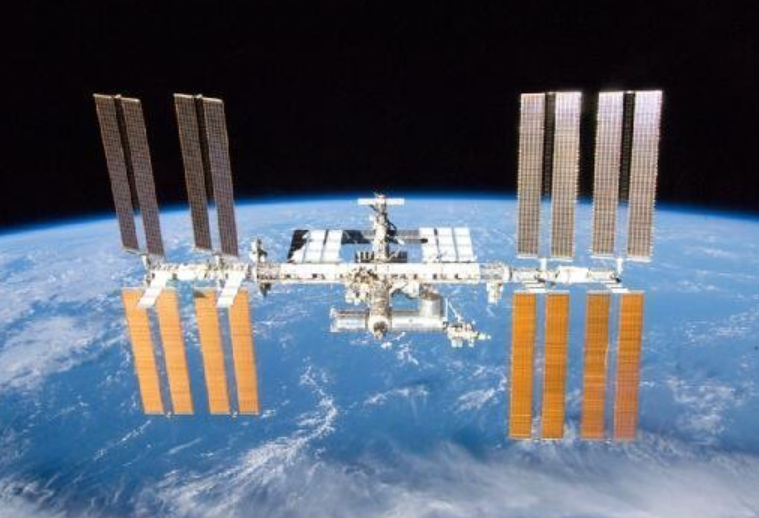
Satellites power themselves primarily with solar panels that convert sunlight into electricity, powering systems and charging energy storage devices during sunlit periods; energy storage then supplies power during eclipses and shading, ensuring continuous operation.
What Causes Orbital Decay and How Is It Mitigated?
Orbital decay occurs due to atmospheric drag and gravitational perturbations; mitigation strategies include altitude selection, propulsion-based reboosts, drag sails, station-keeping algorithms, and timely deorbit plans to ensure controlled reentry and mitigate debris risks.
Can Satellites Be Hacked or Spoofed Signals?
Yes, satellites can be hacked or spoofed signals, though protections exist. Satellite security focuses on cryptographic authentication and robust uplink/downlink controls; defending against signal spoofing requires robust encryption, anti-jamming measures, and anomaly detection to preserve integrity and freedom.
How Long Do Satellites Typically Operate Before Replacement?
Approximately 15–20 years is typical for many satellites; some exceed two decades, others require earlier replacement. Lifetime expectations influence replacement planning, guiding budget, propulsion, and end-of-life disposal decisions for mission continuity and risk management.
What Ethical Concerns Surround Satellite Constellations?
Ethical concerns surround satellite constellations include privacy risks and space debris, as operators weigh benefits against potential surveillance, data misuse, and collision hazards, while governance gaps challenge accountability, transparency, and equitable access in an increasingly privatized orbital environment.
Conclusion
In the quiet architecture of space, satellites are sentinels carved from gravity and code. Their orbits, like silent highways, guide signals and data with disciplined regularity. Sensors translate the world’s whispers into actionable streams, then distill them for ground-based minds. As weather, navigation, and communication interlace, the century’s infrastructure appears almost mythic—a modern pantheon of precise instruments and ethical restraint, ensuring humanity remains connected, informed, and responsible as the planet turns beneath them.